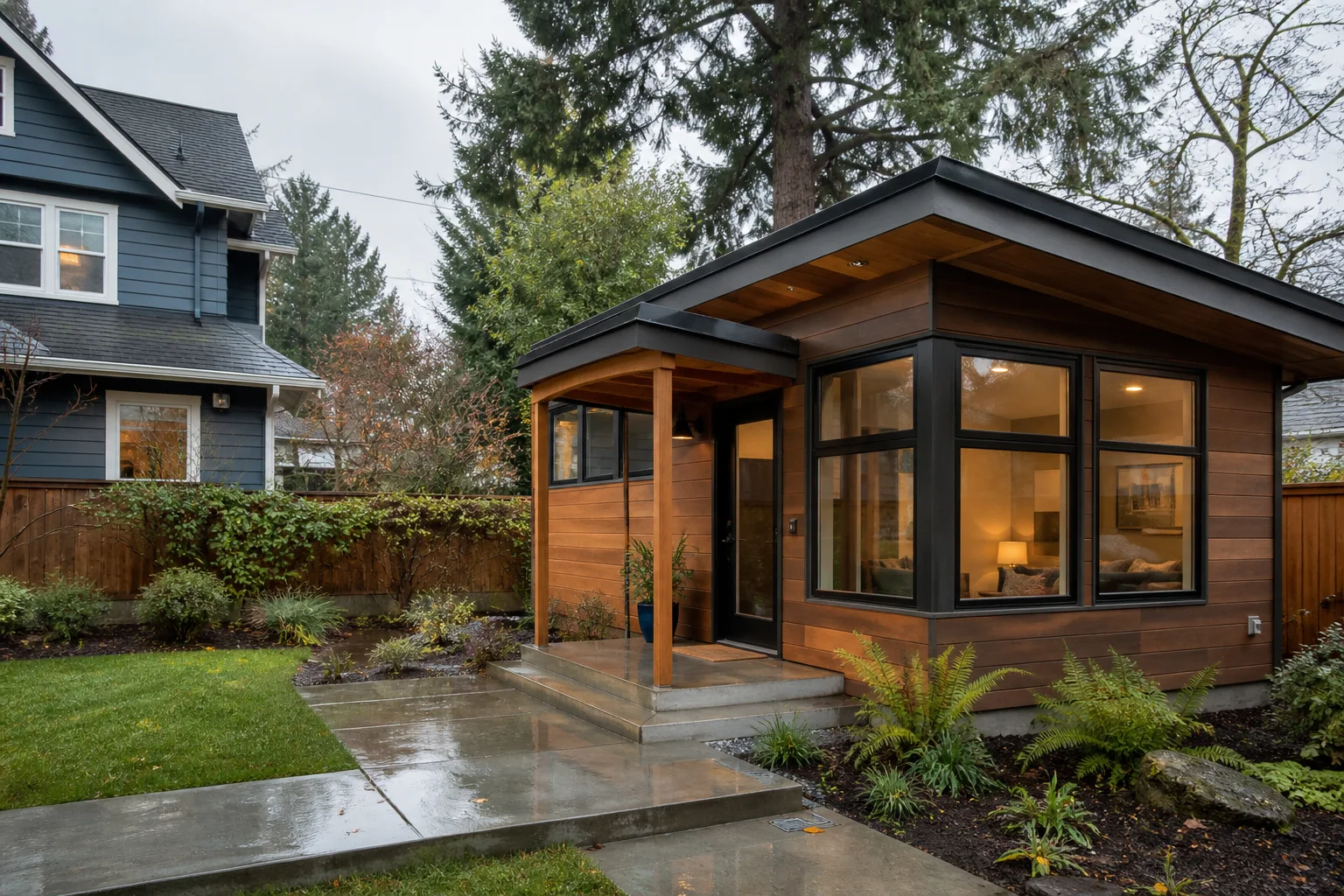
An accessory dwelling unit, or ADU, can be built inside the main house, added to it or placed in the yard. Seattle often calls a different backyard unit a DADU. Each option has different plans, permits, building work and costs.
This is an independent planning and comparison guide. It is not SDCI, a utility, a designer or a builder. It helps owners gather the same details for each company and understand that an attractive plan is not the same as property approval.
Begin with four property answers
Before choosing a design, confirm:
- The permit office. A property with a Seattle mailing address may be in another city or in unincorporated King County.
- What legally exists now. Record the main home, any second unit, the garage and known permit history.
- Where the project can fit. Map buildings, yards, trees, slopes, easements and access from the alley or street.
- How utilities will reach it. Locate the electrical panel, water line, side sewer and likely drainage route.
The Seattle ADU property checklist will show whether you can proceed, need to change the plan or need more details.
Choose the type of ADU after checking the site
Backyard cottage or DADU
A new detached unit gives the main home and ADU more privacy. It is also a complete second building. The price should cover digging, the foundation, frame, roof, exterior walls, heating, plumbing, electrical work and final yard repairs. Read the detached ADU building guide.
Space inside a current building
A basement or garage may cost less because the shell already exists. That saving is real only when the slab, frame, moisture control, ceiling height, fire protection and utilities are suitable for legal living space. Use the conversion guide before requesting a firm price.
Connected addition or internal suite
An attached ADU may need shorter utility lines. But the work affects the main home. Consider wall openings, noise, a different entrance, daylight and shared equipment. Use the attached ADU guide to compare the disruption with a detached unit.
Understand what ADUniverse changes and what it does not
Seattle’s ADUniverse offers pre-approved DADU designs and a property exploration tool. A design that has already received recurring review can make part of the drawing and review path more predictable. It is not a permit issued to every address.
The lot still needs a site plan and its own checks. The City must still review the foundation, drainage, utilities, trees and location on the lot. An attractive drawing does not answer those questions. Compare the options in the pre-approved and custom plan guide.
Build a budget that includes the whole Seattle project
Named 2026 Seattle-area guides publish materially different figures for conversions and new detached units. The Seattle ADU cost guide records a current broad source spread of about $250,000 to $650,000-plus and explains what each source includes. This is not the price of a standard product. A small conversion with nearby utilities should not be compared with a new backyard unit on a difficult lot.
A usable budget distinguishes:
- review, survey and design.
- structural, energy and specialist documents.
- permits, utility reviews and public charges.
- demolition, protection and work access.
- foundation, building shell and interiors.
- power, water, sewer, heating and drainage.
- owner selections and appliance allowances.
- landscaping, paving and cleanup.
- reserves for choices that are not yet closed.
The 2026 Seattle ADU cost guide shows how to put those items into one price-comparison table.
Treat utilities as design inputs
An ADU adds another kitchen, bathroom and occupied living space. The sewer path needs workable elevation and condition. The electrical system needs enough capacity for the planned equipment. Roof water and new hard surfaces need a drainage plan. Trenches must avoid creating conflicts with trees, structures and access.
Seattle City Light, Seattle Public Utilities and other public offices may handle work outside the builder’s basic price. SDCI also warns ADU applicants about King County’s wastewater capacity charge. The utilities and site-work guide lists the questions to ask before requesting prices.
Compare contractors on one written project
Start with the exact business that would sign the agreement. Washington L&I’s contractor tools allow an owner to check registration, bond and insurance details. Then ask for recent work that resembles the planned unit and was reviewed by the same city or county.
Give each company the same version of the drawings, property notes and finish choices. Compare who will answer design questions, work with utilities, respond to permit corrections, arrange inspections and repair disturbed areas. Use the Seattle builder comparison for this side-by-side check.
Use the correct local guide
The Seattle metro area does not use one permit office. The service-area guide separates the City of Seattle from unincorporated King County and nearby cities. It also links to the King County and Eastside guides.
Send a useful project description
The project form asks for the city or ZIP, planned ADU route, what exists now and the outcome the owner wants. Address, budget and timing can be added when useful. The form helps with planning and possible company routing. It does not confirm buildability or create a bid.
Frequently asked questions
Is this the website of a Seattle builder?
No. It publishes independent planning material and may facilitate an introduction to an independent company.
Does a City pre-approved design fit every property?
No. Seattle still reviews how the selected design relates to the particular lot and its foundation, services and other constraints.
Can an online guide calculate the final construction amount?
No. Reliable pricing needs a clear design, a visit to the site and a written list showing who will handle the site and service work.
When should builders enter the process?
Early conversations can test delivery methods and likely costs. Comparable quotes should wait until bidders receive the same stable details.